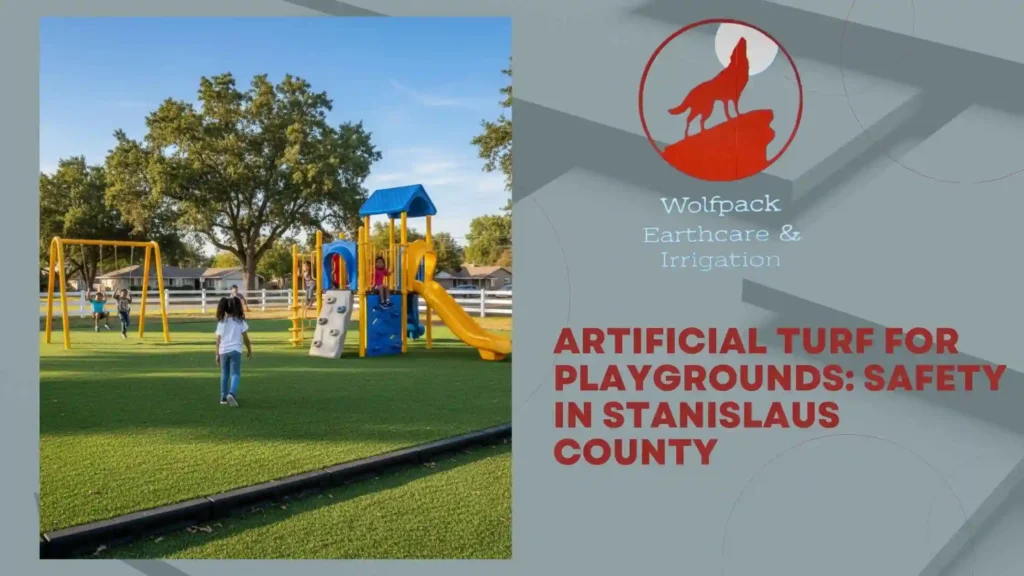
Playgrounds are spaces where children learn, explore, and burn off energy, but safety must always come first. In Stanislaus County, more schools, parks, and homeowners’ associations are switching to artificial turf on playgrounds because it offers a reliable safety surface, reduces injuries, and stays beautiful year-round.
If you’ve wondered whether playground turf is truly safe or worth the investment, this guide breaks down everything you need to know, from fall protection to hygiene, maintenance, and long-term durability.
Why Safety Surfacing Matters on Playgrounds
Children fall a lot. Running, jumping, climbing, and sliding naturally lead to slips and tumbles. Without the right surface, minor accidents can quickly become serious injuries.
Traditional playground surfaces like dirt, wood chips, or worn-down grass may:
- Compact over time
- Hide hazards like rocks and holes
- Become muddy and slippery
- Provide inconsistent cushioning
Artificial playground turf is designed specifically to minimize these risks and create a safer, more predictable environment.
Impact Absorption: Designed to Cushion Falls
One of the biggest safety benefits of playground turf is impact absorption. Quality playground turf systems include:
- A durable synthetic grass layer
- Shock-absorbing padding underneath
- Proper drainage layers
Together, these layers help cushion falls from playground structures, reducing the likelihood of head injuries and fractures.
Many systems meet or exceed ASTM fall-height safety standards, meaning they’re tested to protect kids falling from different equipment heights.
Consistent, Even Ground Surface
Uneven ground is a common cause of trips. With natural grass:
- Roots shift
- Soil erodes
- Potholes form
Artificial turf provides a smooth, level surface that stays uniform over time. There are no patches, ruts, or unexpected dips just a safe, consistent play surface.
This benefit is especially important for:
- Younger children learning to walk
- Kids using mobility devices
- Inclusive playground designs
Cleaner and More Hygienic Than Natural Grass
Parents and school staff often worry about germs and allergens, and for good reason.
Natural grass playgrounds can harbor:
- Mold and bacteria
- Animal droppings
- Pesticides and fertilizers
- Mud and stagnant water
High-quality artificial turf systems use antimicrobial infill and materials designed to resist bacterial growth. They’re also easy to rinse and sanitize when needed.
That means less:
- Mud tracked indoors
- Grass stains on clothes
- Exposure to harmful chemicals
Slip Resistance in All Seasons
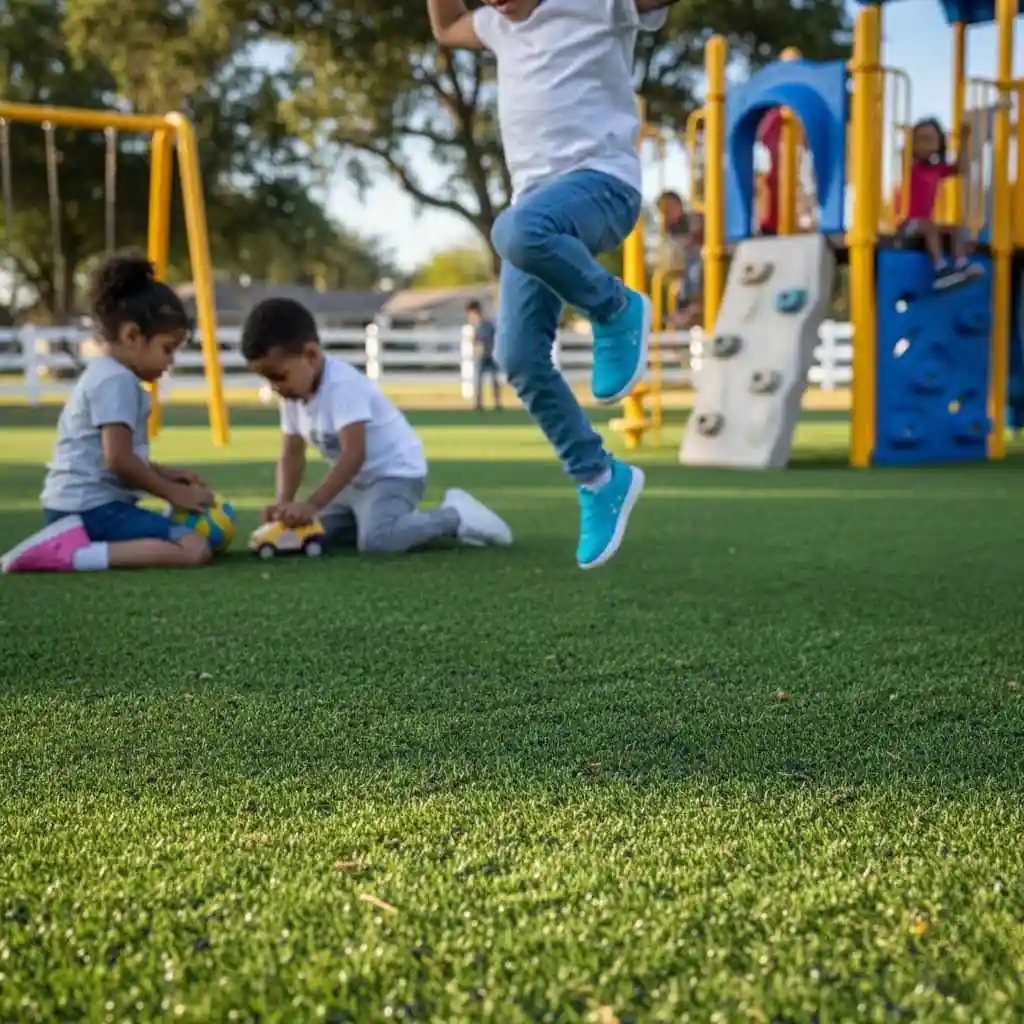
Stanislaus County experiences both hot summers and rainy winter months. Natural grass becomes slick and muddy when wet but playground turf is engineered with drainage technology that moves water away quickly.
Key slip-resistant features include:
- Permeable backing
- Built-in drainage channels
- Non-slip texture
Kids can return to playing safely much sooner after rain without the risk of slipping on mud or puddles.
Heat Considerations And Modern Cooling Solutions
A common concern about synthetic turf is heat. On sunny Central Valley days, turf can get warmer than natural grass. Fortunately, modern playground turf systems include solutions such as:
- Heat-reducing infill
- Lighter color fibers
- Cooling technology fabrics
- Shade structures added around play areas
With smart design and installation, temperature can be managed effectively while still maintaining all the safety benefits.
Low Maintenance With High Safety Reliability
Maintaining grass playgrounds is costly and time-consuming. Crews must mow, fertilize, reseed, and repair damaged patches constantly.
Artificial turf requires:
- Occasional brushing
- Rinsing debris
- Basic inspections
No mowing. No chemicals. No mud.
This is especially beneficial for:
- City parks departments
- School districts
- Daycare facilities
- HOA playgrounds
Less maintenance means more consistent safety and more time kids can actually use the play area.
Durable Enough to Handle Years of Play
Artificial turf systems are built to withstand heavy foot traffic, rough play, and weather changes without wearing out quickly.
Expect:
- Strong, tear-resistant fibers
- UV-resistant technology
- Long-term structural integrity
Unlike grass that turns to dirt under swings and slides, turf stays intact, making it a smart long-term investment.
Eco-Friendly Benefits You Might Not Expect
At first glance, artificial turf may not seem “green,” but consider the environmental impacts it reduces:
- No pesticides or fertilizers
- No gasoline-powered mowing
- Less water usage
- Longevity reduces material waste
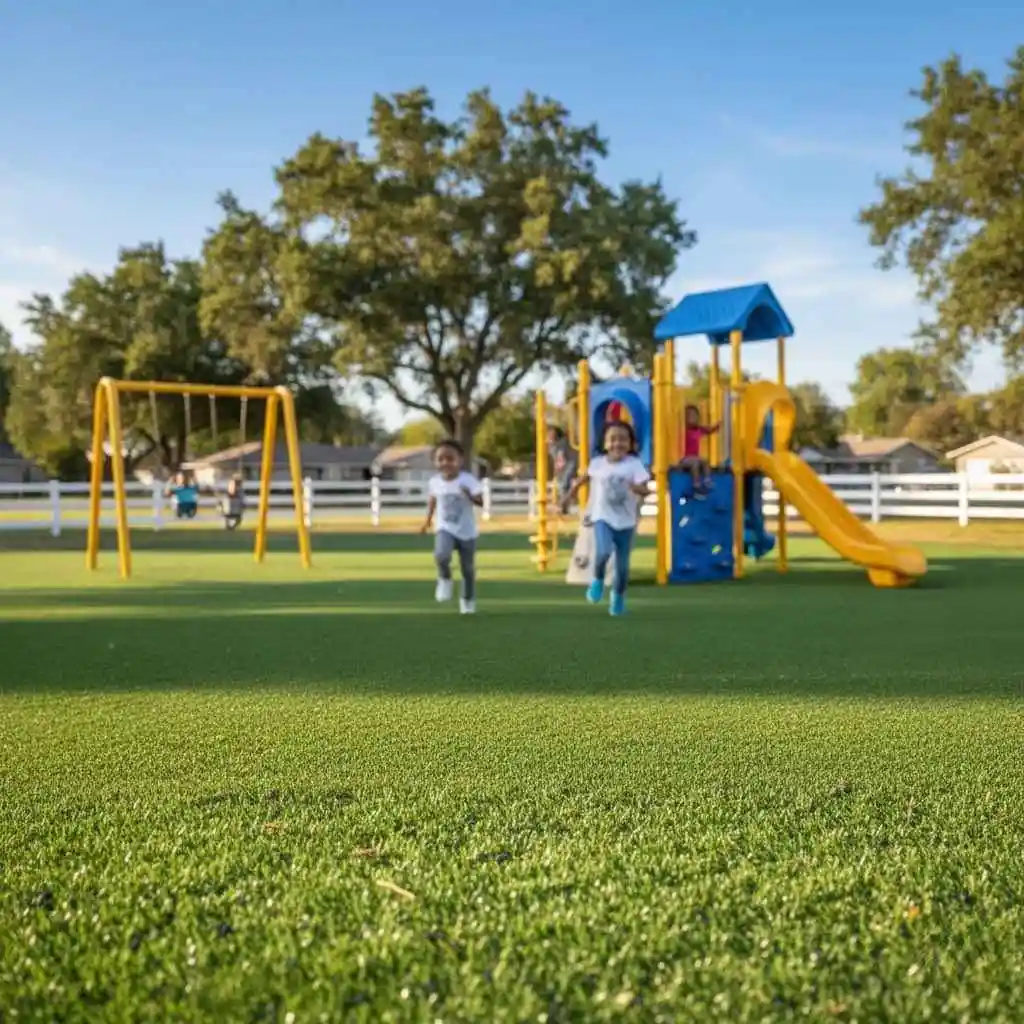
In drought-prone California, water savings alone make artificial turf attractive for communities that value sustainability.
Choosing the Right Installer in Stanislaus County
Not all turf and not all installation is equal. For playground safety, it’s essential to work with professionals experienced specifically in playground surfacing systems.
Look for installers who offer:
- Certified fall-rated systems
- Professional site preparation
- Warranty coverage
- Ongoing maintenance support
A reputable company will gladly walk you through testing certifications, padding thickness options, and design considerations.
Final Thoughts: A Safer Future for Local Playgrounds
Artificial turf isn’t just about aesthetics; it’s about protecting children, reducing maintenance, and creating cleaner, longer-lasting play environments. For communities across Stanislaus County, it’s becoming the go-to solution for playground safety and durability.
Call to Action
If you’re planning a new playground or upgrading an existing one, exploring turf options could be one of the best safety decisions you make. Contact us today!